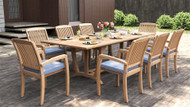
How Dropshipping Teak Furniture Transforms Small Home Goods Stores
18th Dec 2025
Small home goods stores rarely struggle with creativity or taste. What they struggle with is scale. Inventory-heavy categories like furniture demand cash, space, and logistical expertise that most small retailers simply don’t have. Yet furniture—especially premium furniture—is where margins widen, brand perception improves, and average order values grow dramatically.
This is where dropshipping teak furniture fundamentally changes the equation. It allows small retailers to participate in the premium furniture market without assuming the financial and operational risks that traditionally make furniture inaccessible. When executed correctly, teak furniture dropshipping doesn’t just add products—it reshapes how a home goods business grows.
The Growth Ceiling Most Small Home Goods Stores Hit
For many independent retailers and boutique ecommerce brands, growth slows at a predictable point. Sales are steady, customers are loyal, and traffic is growing—but margins are capped by product mix. Décor, textiles, and accessories sell well, but they rarely push order values high enough to unlock meaningful scale.
Furniture feels like the obvious next step, yet it introduces immediate friction. Carrying even a modest furniture assortment ties up capital in slow-moving SKUs, requires storage solutions, and introduces freight logistics that most teams aren’t equipped to handle. One wrong seasonal bet can leave a business sitting on unsold inventory for months.
As a result, many retailers simply avoid furniture altogether—even though customers are actively searching for it.
Why Teak Furniture Changes the Risk Profile
Not all furniture behaves the same way in ecommerce. Teak occupies a unique position because it is inherently premium, durable, and timeless. Customers understand that teak furniture is an investment purchase. They expect higher prices, longer lifespans, and professional delivery. That expectation alone removes much of the friction associated with online furniture sales.
Teak’s physical properties reinforce this advantage. Its natural oils make it resistant to moisture, insects, and rot, which significantly reduces the likelihood of damage-related returns or warranty claims. Unlike trend-driven furniture categories, teak designs remain relevant year after year, making them far less susceptible to seasonal obsolescence.
In a dropshipping context, this stability is critical. Products that don’t rely on fast trend cycles or impulse purchasing are far better suited to extended fulfillment timelines and premium pricing models [1].
From Inventory Risk to Capital Flexibility
The most immediate transformation that dropshipping teak furniture brings is financial. Traditional furniture retail requires upfront investment in inventory that may take months—or years—to sell through. Dropshipping removes that burden entirely.
Instead of purchasing products before demand is proven, retailers only incur product costs after a customer has already placed an order. This shifts capital away from inventory risk and toward growth-driving activities such as marketing, content, and customer experience.
For small businesses, this flexibility is often the difference between cautious survival and confident expansion. Cash that would have been locked into warehouse inventory can instead be deployed to test new acquisition channels, improve merchandising, or expand into adjacent categories.
Expanding Assortment Without Operational Complexity
One of the most overlooked advantages of furniture dropshipping is assortment breadth. A physical store or stocked warehouse limits how many SKUs a retailer can realistically carry. Dropshipping removes that ceiling.
With a dropship model, a small home goods store can present itself like a large-scale furniture brand, offering complete collections rather than isolated pieces. Dining sets, lounge chairs, benches, and complementary accessories can all be merchandised together, encouraging larger basket sizes and more intentional purchases.
From the customer’s perspective, the experience feels curated and comprehensive. From the retailer’s perspective, there is no additional operational burden attached to carrying a larger catalog.
Furniture Logistics Without the Headaches
Furniture fulfillment is complex, and that complexity is one of the primary reasons small retailers avoid the category. Freight shipping, appointment deliveries, packaging standards, and damage handling all require specialized expertise.
A dedicated teak furniture dropshipping partner absorbs this complexity on behalf of the retailer. Orders are routed directly to the manufacturer or fulfillment hub, freight is arranged through experienced carriers, and delivery workflows are standardized.
This removes an enormous operational burden from small teams. Instead of managing freight logistics, retailers can focus on pre-purchase education, post-purchase support, and long-term customer relationships. For lean teams, this simplification is often what makes furniture viable at all.
Elevating Brand Perception Through Premium Materials
Product mix directly influences brand perception. When a store sells only small décor items, customers subconsciously categorize it as an accessory brand. Introducing premium teak furniture changes that narrative.
Teak signals durability, craftsmanship, and long-term value. It places a brand in a higher tier of consideration and attracts customers who are less price-sensitive and more quality-driven. This elevation impacts everything from conversion rates to marketing effectiveness.
High-quality furniture also creates better content. Lifestyle photography, long-form buying guides, and educational articles resonate more strongly when anchored by substantial, aspirational products. Over time, the brand becomes associated not just with style, but with substance.
Sustainability as a Sales Driver, Not a Footnote
Sustainability has moved from a secondary consideration to a primary purchase driver for many furniture buyers. Teak’s longevity plays a powerful role in this conversation. Furniture that lasts decades inherently reduces waste and replacement cycles, a point that resonates with environmentally conscious consumers [2].
When responsibly sourced, teak allows retailers to tell a compelling story about craftsmanship, durability, and long-term value. This narrative supports premium pricing while aligning with modern consumer values. Importantly, it shifts sustainability from a marketing claim to a tangible product benefit.
Scaling Without Scaling Headcount
Most small retailers don’t want to become logistics companies. They want to grow revenue without adding layers of operational complexity or staffing. Dropshipping teak furniture supports exactly that goal.
Because fulfillment, storage, and freight are handled externally, incremental sales do not require proportional increases in internal resources. Order volume can grow significantly without adding warehouse staff or logistics coordinators. This operational leverage is what allows small teams to compete with much larger brands.
The Long-Term Impact on Growth
Over time, retailers who successfully integrate teak furniture into their product mix often see compounding benefits. Average order values rise, paid advertising becomes more efficient, and repeat customers return for complementary purchases. Furniture acts as both a revenue driver and a brand anchor.
Rather than being a risky expansion, teak furniture becomes a stabilizing force—one that supports predictable growth and long-term positioning in the home goods market [3][4].
Conclusion
Dropshipping teak furniture gives small home goods stores access to a category that was once reserved for large, capital-intensive retailers. It replaces inventory risk with flexibility, logistical complexity with simplicity, and limited assortment with scalable breadth.
More importantly, it allows brands to grow into their ambition. By offering premium, durable furniture without carrying stock, small retailers can elevate their positioning, increase profitability, and build a business that scales sustainably—on their own terms.